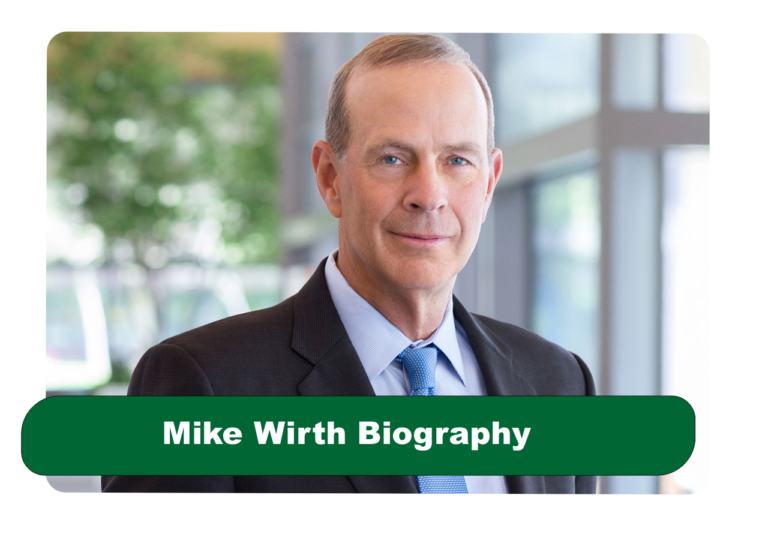
Mike Wirth is the 65-year-old Chairman and CEO of Chevron Corporation since 2018. Explore his career, leadership, the $53B Hess deal, net worth, and energy vision.
Mike Wirth is one of the most influential figures in the global energy industry. As Chairman and CEO of Chevron Corporation — one of the world’s largest integrated energy companies — he has led the company through record shareholder returns, landmark acquisitions, and a shifting energy landscape that demands both pragmatism and long-term vision. Few executives in Big Oil have matched his combination of technical depth, operational breadth, and strategic clarity.
What makes Wirth’s story compelling is how methodically it was built. He joined Chevron straight out of university in 1982 as a design engineer and spent the next 36 years working his way through nearly every corner of the business before reaching the top. There was no shortcut, no lateral move from a rival firm — just four decades of accumulated knowledge inside a single company, which is increasingly rare at the CEO level.
Key Highlights About Mike Wirth
| Detail | Information |
|---|---|
| Full name | Michael K. Wirth |
| Date of birth | October 15, 1960 |
| Age (2026) | 65 years old |
| Birthplace | Golden, Colorado, USA |
| Profession | Business executive, Chairman & CEO |
| Company | Chevron Corporation (NYSE: CVX) |
| CEO since | February 1, 2018 |
| Net worth (2026) | Approximately $100–120 million USD |
| Total 2024 compensation | $32.7 million |
| Education | B.S. Chemical Engineering, University of Colorado Boulder (1982) |
| Famous for | Leading Chevron, $53B Hess acquisition, energy transition strategy |
Early Life and Background
Michael K. Wirth was born on October 15, 1960, in Golden, Colorado. He grew up with a grounded, middle-class upbringing that instilled the kind of discipline and analytical thinking that would define his career. From an early age, he gravitated toward numbers, systems, and problem-solving — the intellectual fingerprints of an engineer in the making. He played football and basketball in school, reflecting the competitive, team-oriented mindset that would later shape his leadership style.
Wirth has remained largely private about his personal life, keeping details about his family out of the public eye. He is married and has children, but has consistently chosen to keep his home life separate from his public profile as one of the most scrutinized CEOs in corporate America.
Education: Engineering as a Foundation
Wirth attended the University of Colorado Boulder, graduating in 1982 with a Bachelor of Science in Chemical Engineering. It was a formative choice — one that equipped him not just with technical skills, but with a mindset for process, efficiency, and systems thinking that he would draw on throughout his career.
His alma mater has since recognized the impact of that foundation. Wirth has received both the Distinguished Engineering Alumni Award and the University Medal from the University of Colorado — the institution’s highest honors for graduates who have achieved exceptional distinction in their fields.
A 36-Year Climb: Career at Chevron
Wirth joined Chevron immediately after graduation in 1982 as a design engineer — an entry-level technical role that gave him direct exposure to the company’s operations from the ground up. What followed was one of the most comprehensive corporate ascents in the energy industry.
Over the next two decades, he moved through engineering, construction, and operations roles across multiple divisions, building expertise that few executives at his level could claim. By 2003, he had risen to President of Global Supply and Trading, overseeing Chevron’s complex international commodity operations. In 2006, he was appointed Executive Vice President of Downstream and Chemicals, a role he held for nearly a decade — managing the refining, marketing, and chemicals segments that form the backbone of Chevron’s consumer-facing business.
In 2016, Wirth stepped into the role of Executive Vice President of Midstream and Development, taking on responsibility for shipping, supply and trading, pipeline and power operations, and Chevron’s broader strategy and business development functions. A year later, he was named Vice Chairman of the Board, the clearest signal yet that he was the company’s next leader. On February 1, 2018, he formally assumed the roles of Chairman and CEO, succeeding John S. Watson.
CEO Era: Strategic Acquisitions and Shareholder Value
Wirth’s tenure as CEO has been defined by disciplined capital allocation and transformative deal-making. He has consistently prioritized returning cash to shareholders through dividends and buybacks while simultaneously pursuing growth through strategic acquisitions.
The first major deal under his leadership was the acquisition of Noble Energy in 2020 — a $5 billion all-stock transaction completed during the depths of the COVID-19 pandemic, when energy asset prices were severely depressed. The deal added approximately 950,000 net acres in the Permian Basin and gave Chevron a significant foothold in the Eastern Mediterranean’s Leviathan natural gas field.
The defining transaction of his tenure, however, is the $53 billion acquisition of Hess Corporation, agreed in October 2023 and completed on July 18, 2025, following a hard-fought arbitration victory over ExxonMobil’s right-of-first-refusal claim on Hess’s 30% stake in Guyana’s Stabroek block. The deal significantly extended Chevron’s production growth profile into the 2030s, adding over 11 billion barrels of net oil-equivalent resources and a premier deepwater position in one of the world’s most prolific new oil basins. As Wirth put it at the close of the deal: the combination was expected to drive meaningful free cash flow and production growth well into the next decade.
Energy Transition and Sustainability Leadership
Wirth is one of the most prominent voices in the ongoing debate about oil’s role in the energy transition. He has consistently argued that oil and gas will remain essential for a “long, long time,” while simultaneously positioning Chevron as an active investor in lower-carbon technologies. Under his leadership, Chevron has invested in carbon capture, hydrogen, and renewable fuels, and has been recognized for achieving some of the highest total carbon sequestration figures of any private company globally.
He has advocated for natural gas as a transition fuel — a pragmatic position that acknowledges the pace of real-world energy demand rather than aspirational policy timelines. Wirth has reduced the methane intensity of Chevron’s oil and gas operations and has spoken at major forums including the Council on Foreign Relations CEO Speaker Series, the Wall Street Journal CEO Summit, the Aspen Ideas Festival, and the World Economic Forum, where he is a member of the International Business Council.
Board Memberships and Industry Influence
Beyond Chevron, Wirth holds a range of influential positions in industry and civic life. He serves on the board of directors of the American Petroleum Institute — the oil industry’s primary trade and lobbying group — as well as Catalyst, an organization focused on advancing women in business, and the National Football Foundation. He is also a member of the National Petroleum Council, the Business Roundtable, and the American Heart Association’s CEO Roundtable. These affiliations reflect a leader who engages actively with policy, corporate governance, and social responsibility — not simply as corporate obligation, but as genuine priority areas.
Net Worth and Compensation
As of 2026, Mike Wirth’s net worth is estimated at approximately $100–120 million USD. This figure is based on his Chevron stock holdings, accumulated compensation over more than seven years as CEO, and publicly disclosed SEC filings. He directly owns more than 50,000 shares of Chevron stock, and has received over $200 million in total compensation since becoming CEO in 2018.
His total compensation for fiscal year 2024 was $32.7 million — a 23.4% increase from the prior year. That package included a $1.9 million base salary, a $3.62 million bonus, $14.28 million in stock awards, $4.37 million in option awards, and over $8.5 million in pension value changes and other compensation. More than 94% of his pay is performance-linked, tying his financial outcomes directly to Chevron’s operational and stock performance.
Recognition and Awards
Wirth’s impact on both Chevron and the broader energy industry has been widely acknowledged. He has received the Distinguished Engineering Alumni Award and the University Medal from the University of Colorado Boulder. He is regularly featured on major corporate power lists and has been a prominent commentator on energy policy through CNBC, the Financial Times, and the New York Times, among other leading publications. In a wide-ranging New York Times interview, he reflected on more than 40 years in energy and Chevron’s evolving role in a world grappling with both energy security and climate change.
Final Thoughts
Mike Wirth’s career is a study in the power of institutional knowledge. In an era when CEO tenures are shrinking and executive mobility across companies is the norm, he represents something increasingly rare — a leader who built his entire career inside one organization and rose to the very top of it. That depth of experience shapes every decision he makes, from capital allocation to acquisition strategy to his position on the energy transition.
At 65, with the Hess integration now underway and Chevron’s Guyana assets set to deliver significant production growth through the 2030s, Wirth’s most consequential chapter may still be unfolding. He has positioned Chevron not just for the energy market of today, but for a more complex and contested one to come. In the global conversation about how the world powers itself, few voices carry more institutional weight.
People Also Ask
What is Mike Wirth known for?
He is best known as the Chairman and CEO of Chevron Corporation, a role he has held since February 2018. He led the company’s landmark $53 billion acquisition of Hess Corporation, completed in July 2025, and has been a central voice in debates around the global energy transition.
How long has Mike Wirth been at Chevron?
Wirth joined Chevron in 1982 as a design engineer straight out of university, making his tenure with the company over 44 years as of 2026. He is a rare example of a Fortune 500 CEO who has spent his entire professional career at a single organization.
What is Mike Wirth’s educational background?
He holds a Bachelor of Science in Chemical Engineering from the University of Colorado Boulder, earned in 1982. His alma mater has awarded him both the Distinguished Engineering Alumni Award and the University Medal — the school’s highest honor for graduates.
What is Mike Wirth’s net worth in 2026?
His net worth is estimated at approximately $100–120 million USD as of 2026, based on Chevron stock holdings and accumulated compensation since becoming CEO. His 2024 total compensation alone was $32.7 million, of which over 94% was performance-linked.
What is the Hess acquisition and why does it matter?
Chevron acquired Hess Corporation in a $53 billion all-stock deal, completed on July 18, 2025. The deal gave Chevron a major stake in Guyana’s Stabroek block — one of the world’s largest new offshore oil discoveries — significantly extending the company’s production growth profile into the 2030s.